The American bail system began as a practical tool, not a political lightning arrester. Neighborhood sheriffs, https://andresopkz265.trexgame.net/comprehending-bail-schedules-and-just-how-they-impact-bonds early american magistrates, and taking a trip accuseds needed a method to handle pretrial liberty without obstructing jails or shedding accuseds that had every incentive to drift out of town. Bail, at its core, is an assurance backed by money or home that an individual will certainly stand for court. Bail bonds are the personal market variation of that pledge, where a certified bail bondsman assures the court an offender's appearance for a fee. That portable audios straightforward. Its history, with waves of reform, financial incentives, and constitutional limit lines, is anything but.
English roots and American adaptations
American bond regulation acquired its bones from English practice. Medieval constables might apprehend or launch implicated individuals, in some cases extracting guaranties from neighbors happy to attest them. In time, Parliament and the common law checked abuses. The 1275 Law of Westminster sketched groups of bailable and non-bailable offenses. The 1689 English Bill of Civil liberties restricted excessive bond, etching the principle that money must not be utilized to squash freedom prior to trial.
When swarms transplanted these concepts, they adjusted them to a very finely staffed frontier. Courts satisfied periodically, transport was slow-moving, and prisons were scarce and unhygienic. Bond was a practical need. Early American laws preferred broad bailability and judicial discretion. The phrase "excessive bond will not be called for" crossed the Atlantic and landed in the Eighth Amendment, a warranty covered to a Constitution suspicious of uncontrolled power. That clause does not create a right to bail in every situation, however it limits just how money can be used to cage people prior to regret is proven.
By the 19th century, a distinctive American function emerged: commercial guaranty. Instead of counting solely on household or individual recognizances, accuseds might turn to a bondsman. The bail bondsman, certified by the state, would promise the complete bail total up to the court and charge the defendant a nonrefundable fee, commonly 10 percent, to assume the danger. That charge was the cost of pretrial liberty for those without cash money or collateral to post bail directly.
The birth of the bail bonds industry
Commercial guaranty entered the criminal courts in the late 1800s and early 1900s, accelerated by urbanization, mobility, and professionalization. Courts required reputable guarantors. Bondsmen discovered to examine flight threat, gather personal data, and deploy sensible tools like tips and check-ins long prior to those strategies had scholastic tags. Some companies run with discipline, counted on security, and created reputations with courts and clerks. Others reduced edges or posted bonds for clients who were not likely to appear, after that pursued them boldy when they missed out on court.
That hunting component, the fugitive recovery organization, became part of the social material, sometimes glamorized and often misunderstood. Bounty searching was never a free-for-all. Its validity hinges on contract regulation and state licensing programs. A defendant who signs a bonding arrangement usually consents to particular arrest powers by the bondsman or an employed agent if the offender fails to appear. States vary in their policies, and specialist bondsmen comply with those regulations very closely, or they discover themselves locked out of courthouses by courts who value dependability over bravado.
By the mid-20th century, the bail bonds market had a well-known shape. Bondsmen preserved shops near courthouses, marketed in telephone directory, and cultivated connections with defense lawyers. Charges gathered at 10 percent, sometimes greater for risky instances. Business model grew in territories where courts establish monetary bail as the default. It also seeded the core controversy that still defines discussions today. Should an individual's freedom turn on their access to cash? If charges are nonrefundable also when cases are rejected, is the system extracting riches from people assumed innocent?
Constitutional guardrails and an early reform wave
The High court has actually attracted the limit lines with restraint. In Heap v. Boyle (1951 ), the Court emphasized that bond established higher than what is fairly necessary to make certain look violates the Eighth Modification. In Carlson v. Landon (1952 ), the Court held that the Constitution does not assure bail for all offenses or in every context. The Court's the majority of critical modern judgment, USA v. Salerno (1987 ), maintained the Bail Reform Act of 1984, enabling precautionary apprehension in government instances when clear and persuading evidence revealed an accused positioned a threat to the community. Salerno affirmed that public security might justify detention without going against the Eighth Change, as long as procedures were robust.
Reform began earlier at the government degree. The 1966 Federal Bond Reform Act focused on launch on recognizance and nonfinancial conditions, reflecting research that a lot of accuseds returned to court without a monetary risk. The pendulum turned back in 1984, when Congress included public security to the calculus and produced a more formal pretrial services device. In method, federal courts moved far from regular cash money bond. Lots of accuseds were launched under guidance, some were apprehended after adversarial hearings, and cash money bail came to be unusual in government cases.
States charted their very own paths. Some mirrored federal reforms, purchasing pretrial services devices that examine threat, suggest conditions, and give suggestions. Others continued to lean heavily on monetary bail and the exclusive bond market. The array is broad. A person arrested for the exact same infraction might encounter a no-money release in one county and a $25,000 bail in another, relying on local guidelines, culture, and sources. That variant gas both policy experimentation and public frustration.
How a bail bond operates in practice
Anyone who has rested with a family members in a bail office knows the mathematics and feeling that collide at that counter. Expect a judge establishes bail at $50,000. Few families can generate that quantity in cash money or residential or commercial property within hours. If they publish cash money bond directly, the court holds it until the case ends, after that returns it minus fees and penalties if the individual appeared as called for. If the family members transforms to a bail bondsman, they pay a cost, usually 10 percent, often with security. That fee is nonrefundable. The bondsman files a bond with the court and thinks the obligation to pay the full amount if the accused stops working to appear and the bond is forfeited.
Risk administration defines the bondsman's craft. Analyze the offender's ties, employment, prior appearances, compound use, and traveling patterns. Call for cosigners. Get get in touch with info for loved ones and employers. Arrange check-ins prior to court days. Use text reminders and ride arrangements. If somebody misses out on court, act rapidly to fix it. Lots of failings to show up are not leaves however complication regarding dates, transportation troubles, or anxiousness. A timely phone call to the staff and a voluntary surrender can treat the default, preserving the bond and the offender's freedom.
From the court's point of view, a bond is a conditional assurance. If the assurance breaks, courts have tools. They can issue a bench warrant, schedule a hearing, and decide whether to forfeit the bond. They can give credit history for partial performance if the bail bondsman returns the defendant without delay. Local method matters. Some territories are strict, others extra forgiving if the underlying violation is minor.
Economics, rewards, and edge cases
The bail bonds market runs on incentives. Maintain forfeitures reduced, deal with court personnel well, and maintain clients showing up. That placement can generate trustworthy results. The rubbing turns up in 3 places.
First, the nonrefundable fee is a blunt tool. A person who is acquitted or whose fees are dismissed has still paid the bondsman charge. Movie critics call that unreasonable. Bondsmen respond that the cost covers the risk, the hours, and the economic exposure that come with every bond, also when points go smoothly.
Second, security can become a wedge within families. Moms and dads or relatives typically promise automobiles or actions to secure a bond. If the accused misses out on court and can not be created, the bail bondsman can move versus security. Many bail bondsmans avoid repossession unless they have no option, since area online reputation matters. Still, the hazard is actual, and it changes family members dynamics.
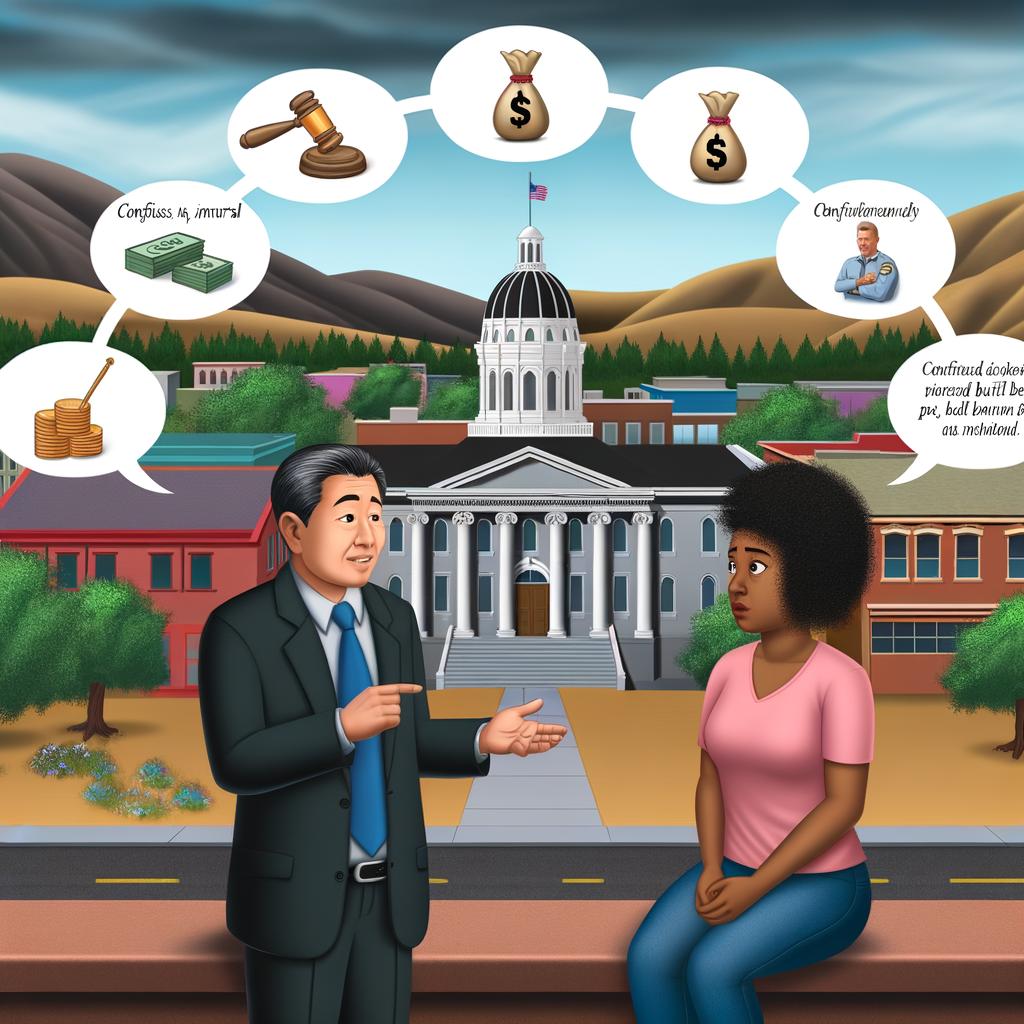
Third, low-level cases can produce outsized concerns. A $5,000 bail on a shoplifting situation translates right into a $500 cost, which could equate to a week's incomes. In some counties, judges and district attorneys will consent to launch on recognizance after a day or more, making the initial bond an unneeded cost. In others, the cost is the rate for going home that evening. The rhythms differ therefore does the general public's tolerance for those trade-offs.
The modern reform age and the data turn
Over the last decade, reform increased. Jurisdictions started to determine pretrial appearance rates and brand-new criminal activity, as opposed to rely on presumptions. The numbers tended to reveal that straightforward interventions like pointers by text or phone enhanced appearance, and that lots of people went back to court without a financial risk. New Jersey's 2017 overhaul all but removed cash money bond in favor of threat analyses and monitored launch. The very early results revealed continual court look prices and lower pretrial prison populations, with later adjustments to address violent criminal offense concerns.
California attempted a statewide shift in 2018 with Senate Expense 10, changing money bond with a risk-based system. Voters denied the measure in 2020, showing suspicion of algorithmic devices and the comfort of recognized systems. At the same time, the California Supreme Court regulationed in In re Humphrey that courts should consider an accused's capability to pay and use nonfinancial conditions whenever feasible. The outcome is an uneasy hybrid. Bail remains in operation, but courts are under stress to calibrate amounts and consider alternatives.
Illinois moved furthest, implementing the Pretrial Justness Act in 2023 and finishing cash money bond statewide. Juries now determine release or detention based on safety and security and trip danger, after adversarial hearings. Early reports reveal decreases in pretrial prison populaces without a spike in failings to appear, though information collection remains messy and partisan spin speeds up after every top-level incident.
New York revised bail legislations in 2019, dramatically limiting cash bond for many misdemeanors and nonviolent felonies. 2 rounds of modifications followed to provide courts extra discernment. Through the noise, look rates have actually continued to be high. The argument frequently merges rearrests and pretrial release, however much deeper analysis typically reveals that a little portion of offenders drives public safety and security issues, regardless of the bond regime.
The commercial bond sector has dealt with a number of these reforms, in courts and at the ballot box, arguing that private guaranties outmatch government-supervised launch at getting people back to court. Independent researches show combined results that rest on regional method. In position with strong pretrial services, robust tip systems, and clear repercussions for missed out on court, nonfinancial release does well. In position without those supports, bail bondsmans fill up a gap, especially after-hours and on weekends, when judges and pretrial team are scarce.
The constitutional core still matters
Despite experiments, two concepts hold stable. Bail exists to guarantee look and, in several jurisdictions, to secure public safety and security. It can not be used to penalize. Extreme bail violates the Eighth Amendment when it surpasses what is fairly needed to achieve those goals. Capability to pay is a crucial part of that calculus. Courts progressively call for on-the-record searchings for when they set bail that a person can not afford. Those needs are not mere formalities. They are the constitutional back that keeps pretrial apprehension from coming to be a tool of poverty-based incarceration.
Salerno stays the support for precautionary apprehension in the federal system and a rule of thumb for states. If the federal government looks for to restrain someone as a result of threat or high trip risk, it must prove that case with evidence in a hearing, not by establishing bail so high that release is difficult. That distinction appears technical, yet it forces clearness. Apprehension is a serious step that needs to be transparent, not buried in numbers.
Technology, text messages, and much less beauty than TV
A quiet transformation in pretrial administration has absolutely nothing to do with court drama and every little thing to do with contact number. Courts that send out basic suggestions see less missed looks. Some go further, supplying maps, transit routes, and a choice to request a brand-new day prior to a bench warrant concerns. These tools set you back pennies compared to prison beds, and they treat accuseds as individuals with messy lives, not as trip threats by default.
Electronic surveillance is extra complicated. Ankle bracelets can assure a judge and enable release when apprehension would otherwise be gotten. They also impose day-to-day costs in many territories, transforming release right into a metered solution. Tracking can be a lifesaver in a high-risk case or an unneeded concern in a low-level one. On this surface, details matter. Period, charge waivers, clear removal standards, and timely testimonial of false signals draw the line between liable supervision and punitive surveillance.
What bail bondsmans do past the bond
A seasoned bondsman acts as a translator in between systems. A mother calls at midnight from a holding cell phone line. A first arraignment is scheduled for the morning. The bondsman clarifies the timeline, the most likely bond range based upon neighborhood standards, and whether a cosigner will be required. After launch, the bondsman nudges customers to update addresses, assists them review their notifications, and tracks continuations. When individuals encounter warrants for missed out on dates, a phone call to the bondsman often comes before a contact us to a lawyer. That human link is component business, part community service, and component danger management.
Some companies run referral networks for therapy and real estate. A client with an opioid use condition is less likely to make it to court if detoxification is not addressed. When bondsmen cultivate these ties, they minimize their very own risk while improving results. There are restrictions. A bond agency is not a social solution. Time is cash, and unremunerated labor can not stretch forever. Still, the most effective drivers build adequate cushion to aid maintain those who will react to help.
Where the bail bonds industry is shrinking, and where it is not
The sector has actually lost ground in jurisdictions that minimized dependence on money bond. New Jacket's overhaul shrank the market drastically. Washington, D.C., which depends on pretrial solutions and does not utilize business bond, has not had a bonds industry for decades. Illinois' brand-new framework removed it overnight. California's jumble restricts development, particularly in regions that expanded pretrial release. Yet in big swaths of the country, especially in the South and components of the Midwest, business guaranty stays common. Region jails, county judges, and area staffs run systems that are locally meaningful, also if they clash with nationwide reform narratives.
When criminal offense spikes, the pendulum relocations. Political leaders under pressure call for "stricter bond." That expression generally means even more detention or higher bond quantities, which typically revives need for bonds. When prison congestion or budget strain comes to be unsustainable, courts increase citations, desk look tickets, and nonfinancial launch, which depresses the marketplace. The industry's size is a barometer of plan selections, not a repaired constant.
Myths that linger and realities that help
Here are 3 explanations that tend to boost conversations about Bail Bonds:
- Bail is not a penalty. A great punishes after sentence. Bond is a pretrial tool, and its monetary parts are not expected to punish. When bail functions as penalty, courts are bound to revisit it. Bond charges are not reimbursed. Paying a bail bondsman is like acquiring insurance coverage. If everything goes well, you still paid for the threat transfer and the service. If you can post cash bond straight, and you are certain you will not miss out on court, you may favor to stay clear of the fee. Most failings to appear are not gets away. They are missed buses, child care dilemmas, or anxiety. Equipments that allow fast rescheduling and send pointers often tend to show fewer warrants and far better compliance without increasing risk.
The restrictions of prediction and the worth of judgment
Risk assessment tools have promise and real limitations. They can bring uniformity and lower nude wealth-based choices. They can also inscribe historic biases if fed skewed data. A tool that weighs prior apprehensions will punish people from communities with heavy cops presence also when charging patterns moved. Static elements do not record unexpected positive changes, like a new work or stable real estate, and they do not see a downward spiral prior to it crests. Good judges utilize tools as one input, not a substitute for human judgment. Excellent defense attorney bring context that numbers miss.
Bondsmen create their own heuristics. An offender who answers the phone on the very first ring and uses to bring pay stubs to the workplace has a tendency to be reputable. An individual with three various contact number in two weeks advantages caution. These observations are not scientific, but they are not arbitrary. Lived experience fills in the spaces in between court timetables and plan reports.
Where reform can concentrate without losing the plot
Sustained progress comes from practical steps that value both liberty and safety. Courts need to establish bail just when essential. When they do, capacity to pay should be front and center. If nonfinancial problems can moderately ensure appearance or security, utilize them. Purchase reminders, transport help, and rapid warrant recall for low-risk failures to appear. When preventative apprehension is looked for, call for proof and a hearing, and maintain apprehension directly customized to the cases that genuinely demand it.
Commercial surety still has a role in lots of territories. Where it continues to be, regulatory authorities ought to police abuses without suffocating legitimate operations. Clear forfeit treatments, punctual notice, and fair credit report when a defendant is returned go a lengthy means. Openness concerning fees and security protects households from surprises. Cooperation with pretrial solutions can transform a purely economic arrangement into a safety net that minimizes turmoil and boosts compliance.

The long arc, not a straight line
The tale of bail bonds in the USA started with English warranties versus excess and advanced with American improvisation. For generations, the bail bonds sector supplied a bridge between jampacked prisons and hectic courts, monetizing risk in a manner that made sense to local actors. Radicals revealed the cost that come close to imposed on inadequate defendants and questioned whether money was the right bar to draw. Policymakers answered with laws, formulas, and solutions that in some cases enhanced outcomes and in some cases stumbled.
The surface ahead will certainly keep moving. Economic cycles, criminal offense fads, court backlogs, and innovation will remain to improve technique. What should not transform is the constitutional humility that pretrial freedom needs. A person detained is still assumed innocent. The goal is not to assure excellence, yet to handle danger with fairness and sincerity. When systems deal with people like participants of a community rather than troubles to be refined, appearance rates boost, public security obtains a peaceful ally, and the old quarrel over bond looks less like ideology and more like management.
Bail bonds sit inside that management obstacle. They are neither rescuer neither scourge. They are a tool that grew in the gaps of American justice, practical in some locations, misused in others, and always formed by neighborhood options. Comprehending just how they arised, why they continued, and where they fit today assists us steer the next round of adjustments with fewer mottos and even more facts.

ABBA Bail Bonds 900 Avila St STE 101 Los Angeles, CA 90012 (213) 296-0901 https://abbabailbonds.com